
Endless Pride, Part 2: Lisbon
LGBTQ languages of love and struggle are universal, even when they require translation.

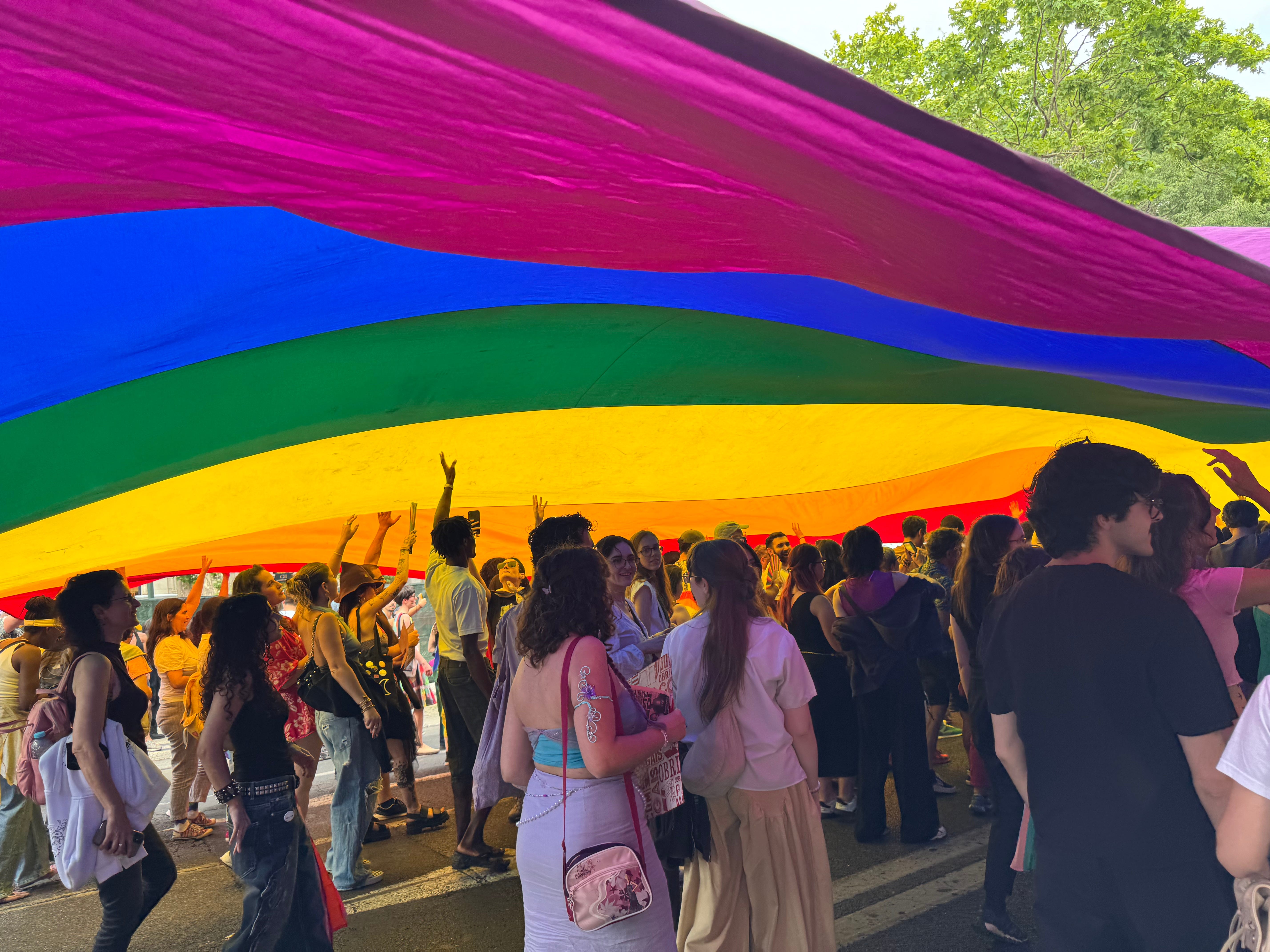
The moment was bizarre in its familiarity: young people moving joyously down a street underneath an enormous, billowing rainbow flag. We were on Avenida da Liberdade in central Lisbon, but I’d witnessed an identical scene on the streets of downtown Wichita.
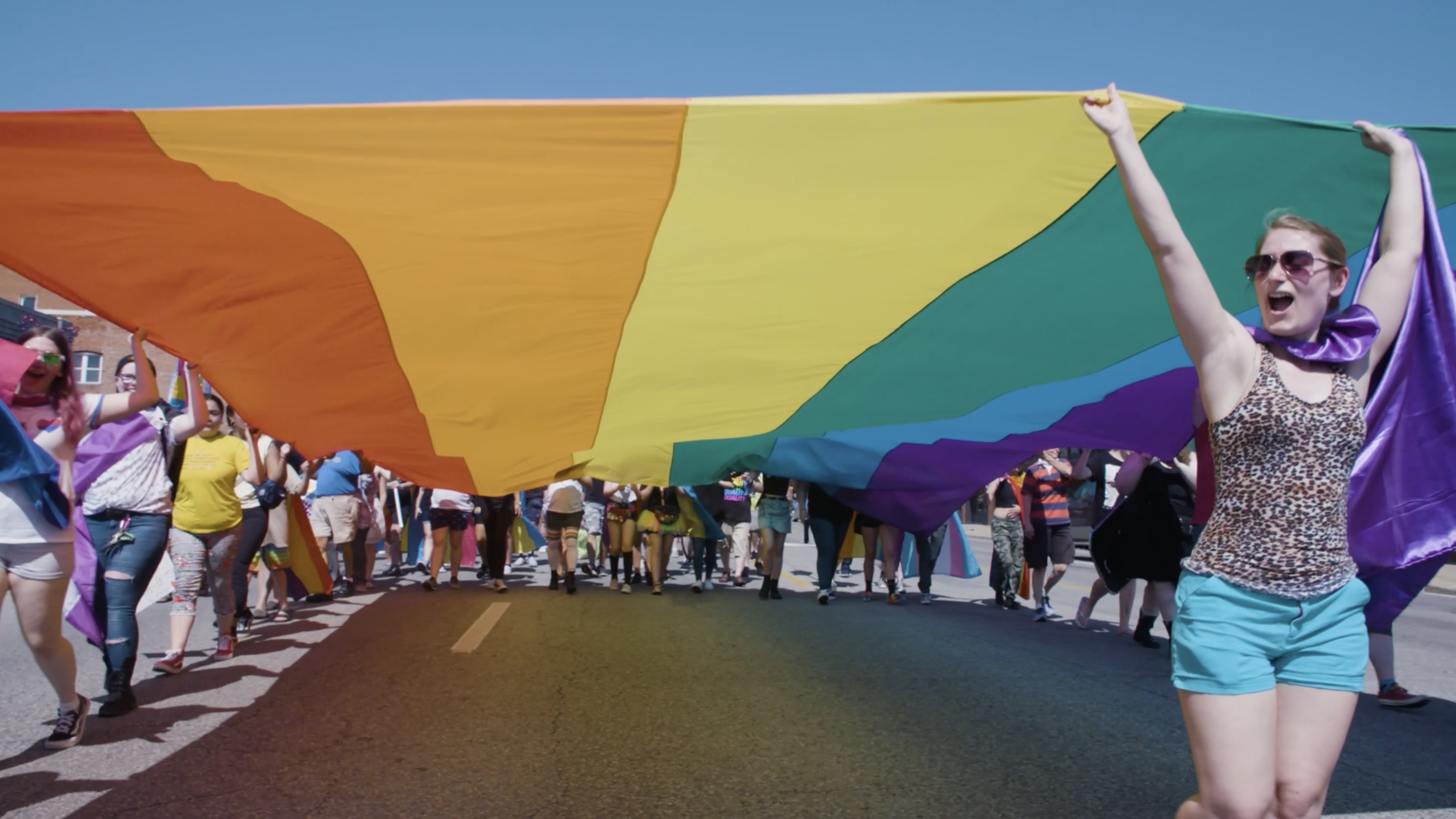
A man from Kansas created the rainbow flag, which I won’t apologize for repeating at every opportunity. As I wrote last week, I’ve been to enough Prides over the decades to know what to expect, even in a different country. So, I expected to see rainbow flags flying everywhere on June 6, at the Marcha Do Orgulho LGBTI+ De Lisboa, in an estimated crowd of 50,000 people.
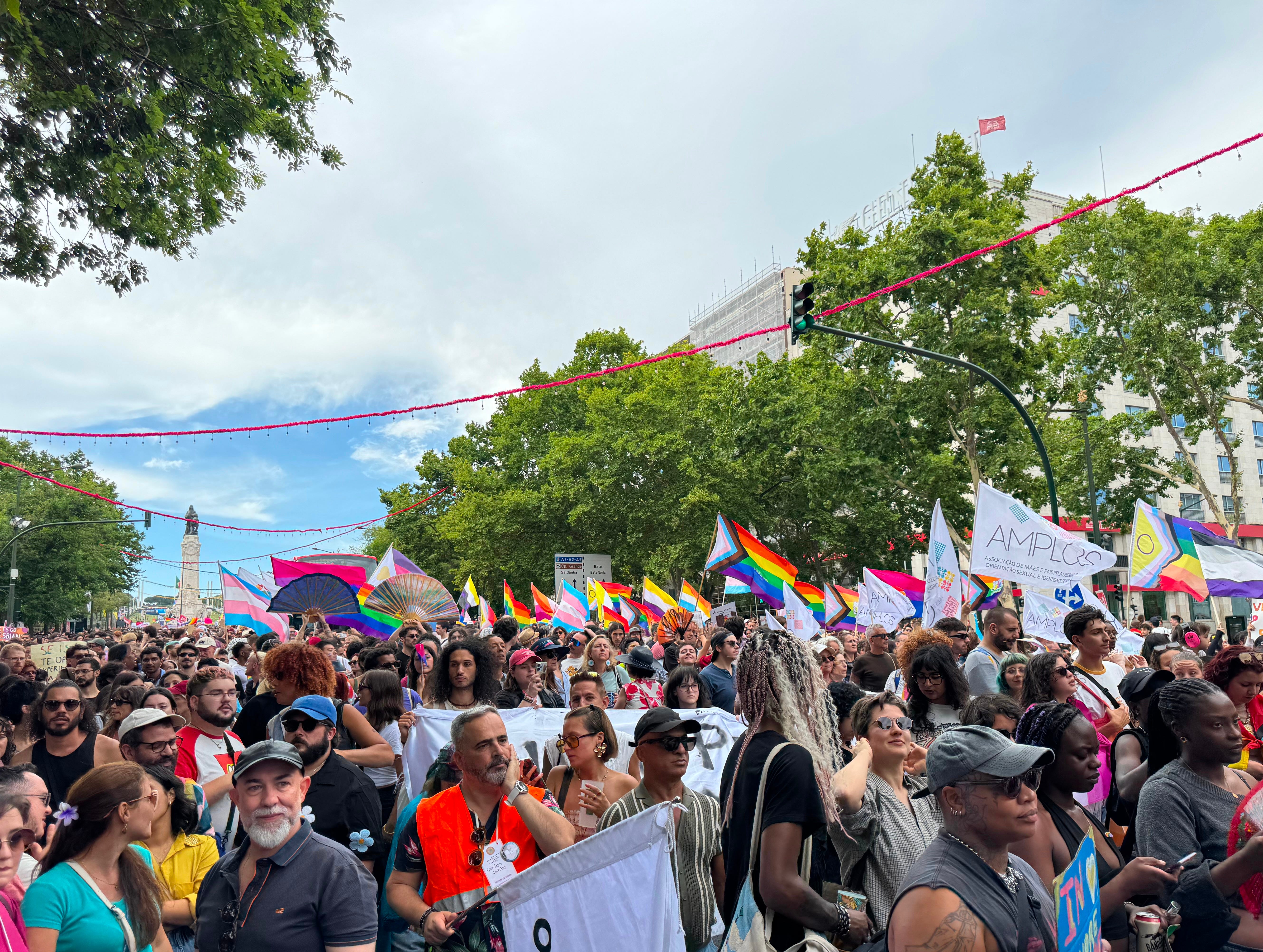
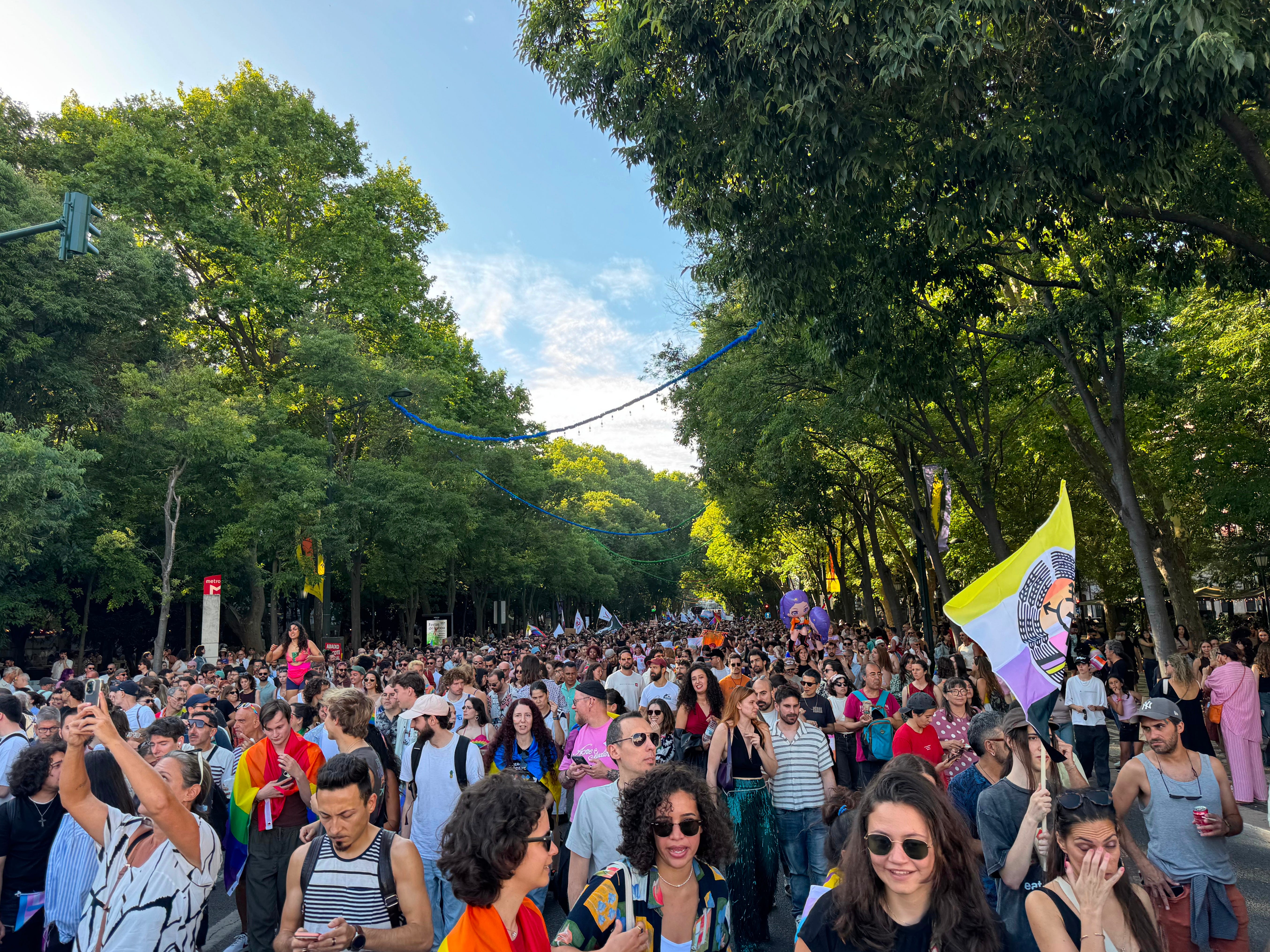
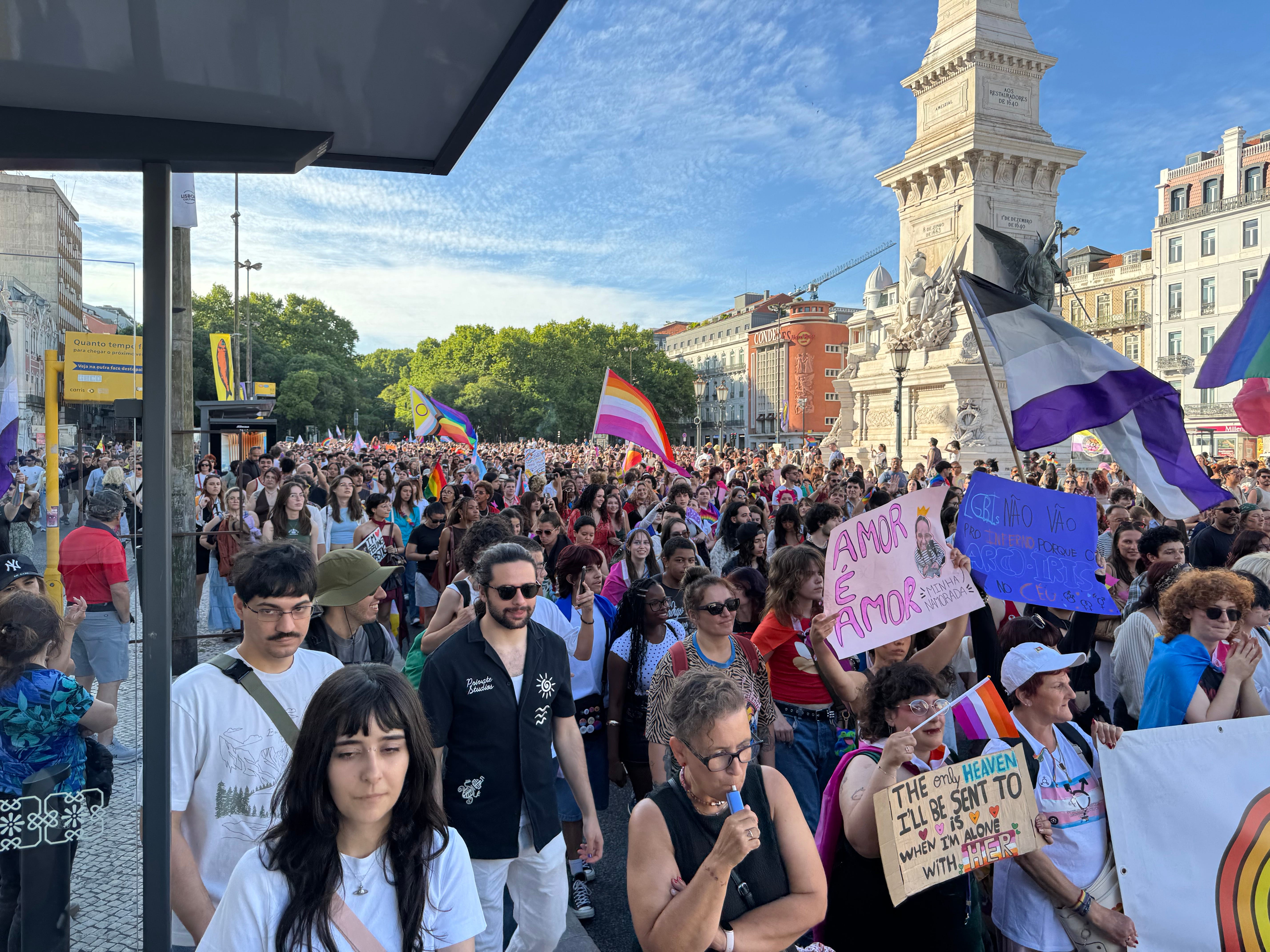
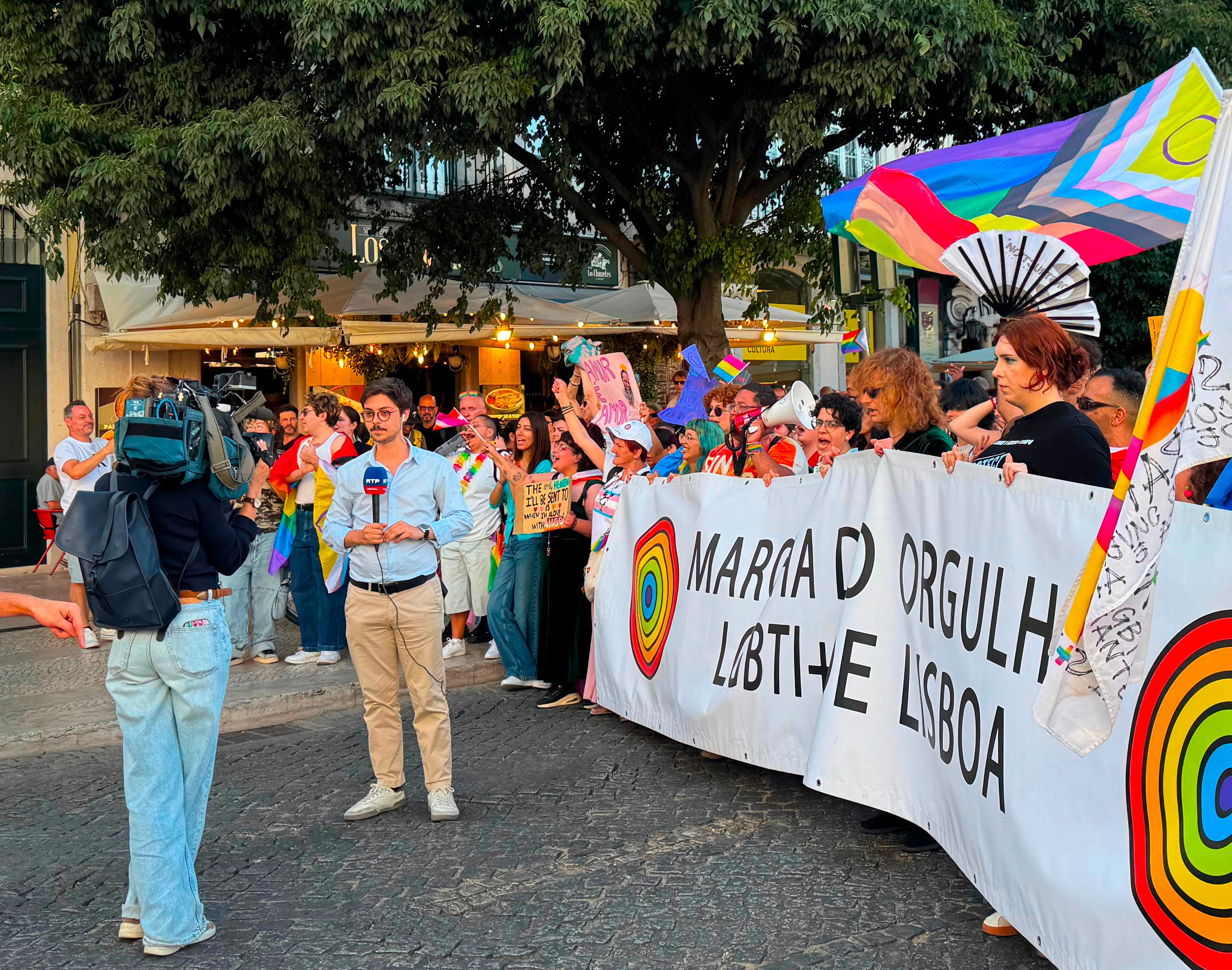
Knowing what to expect can be surprisingly emotional when it’s your first Pride in the capital of your new country.
It wasn’t my first Pride in Portugal. That was back in October, when thousands of people turned out for the first Pride march in Setúbal. We’d only been here for a few weeks. The day felt historic for the crowd and complex for us, a fun and appropriate welcome to our new city and country that reinforced how little we knew — such as the words to the marchers’ chants.
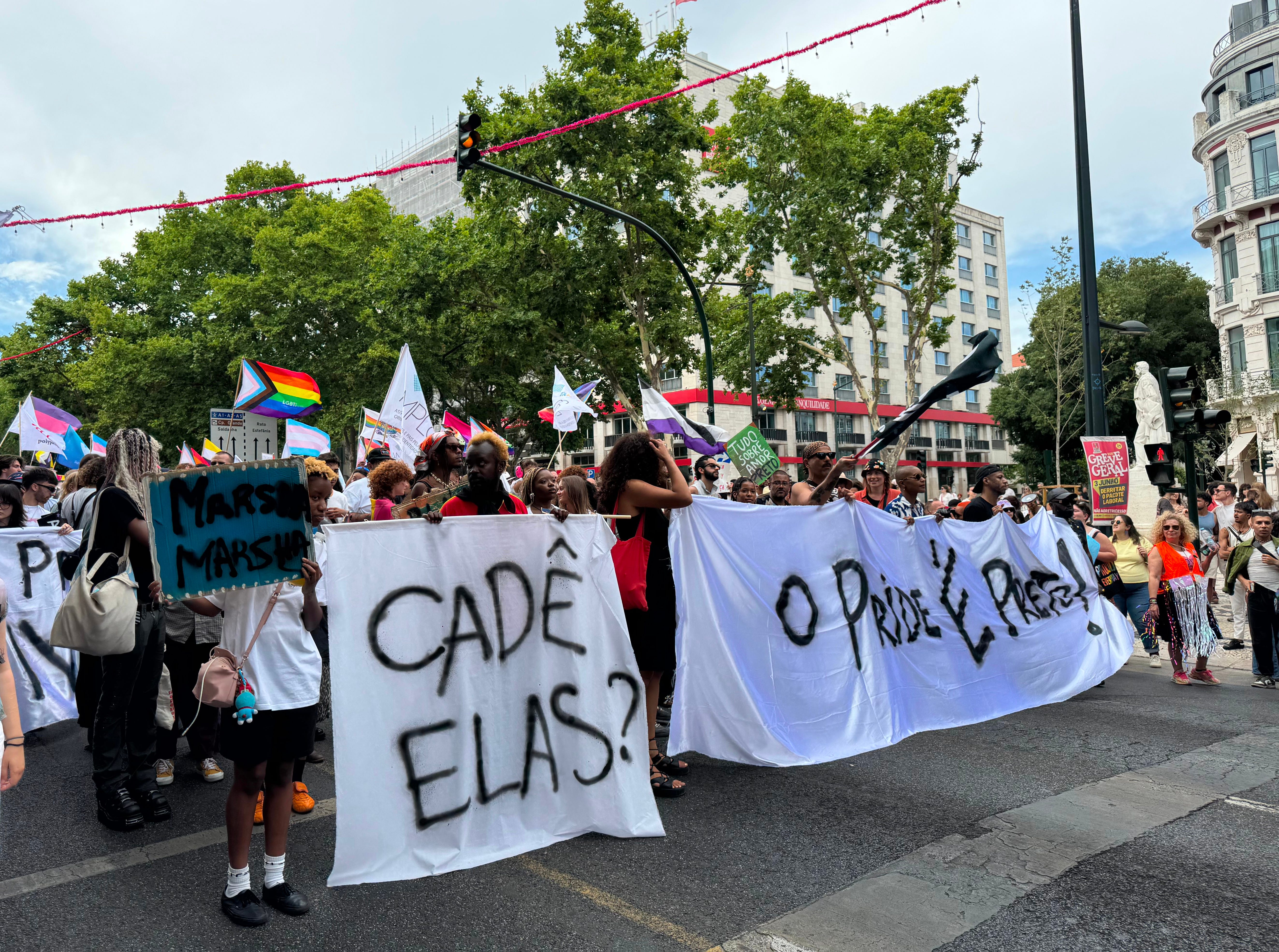
Seven months later in Lisbon, I understood enough Portuguese to know what this sign said without having to ask a translation app:
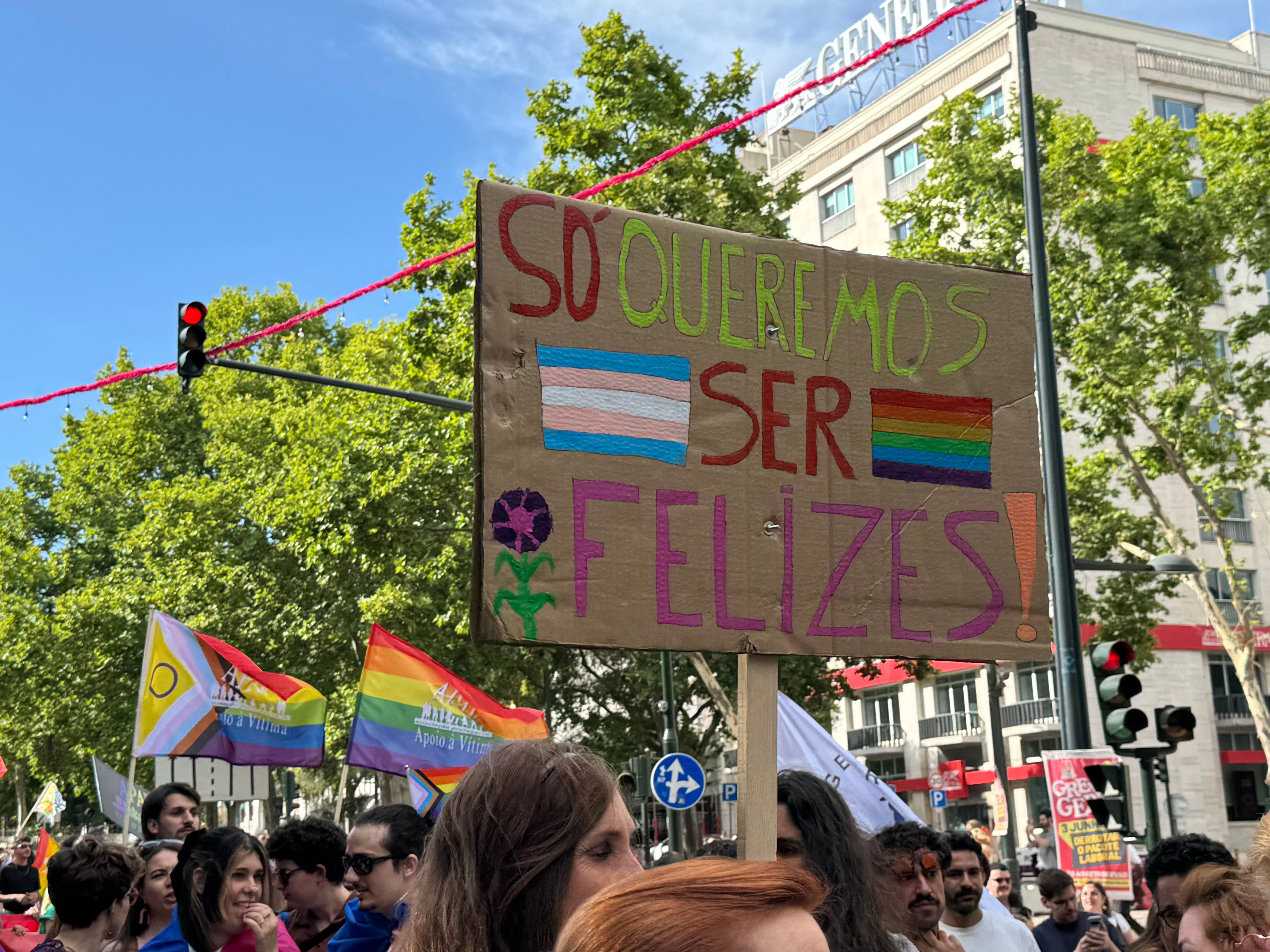
I also saw plenty of signs and T-shirts in English. Some marchers even demonstrated in English:
But there was still plenty I didn’t understand, such as what the man with the megaphone was saying as the procession continued south through the Baixa, Lisbon’s historic center. Later I sent the video to my Portuguese friend Ana with a plea for help. “He is saying: ‘Da terra à lua, a luta continua,’ and the crowd is chanting back,” she wrote. “Meaning: from here to the moon, we continue the fight.”
A few other things I understand all too well. Portugal’s Parliament is not immune to the same rightwing forces fueling the backlash against LGBTQ progress in the United States. In March, lawmakers here reversed some of the world’s most progressive protections for transgender people.
And I know that, for reasons organizers found suspicious, city officials did not allow the traditional festival, Arraial Pride, at the march’s end point in the Praça do Comércio, Lisbon’s signature square on the banks of the Tagus River.
Organizers said the rollback in human rights and the Arraial Pride denial reinforced that “the importance of this demonstration is undeniable and a symbol of pride and struggle for the community, their families and allies.”
New attacks on our community, the pendulum swinging back to pummel us — that’s just as familiar as all of those colorful flags flying in resistance. It’s distressing to watch it happening in one of the world’s safest countries, not just for LGBTQ people but for all humans. I don’t know enough about Portugal’s politics to speak with anything close to authority, but if the results of municipal elections throughout the country last fall and the presidential election earlier this year are any indication, people here seem to be recognizing and rejecting the far right’s threats to their beautiful way of life.
That way of life showed in a couple of big differences between Pride in Lisbon and Prides I’ve attended in the United States.
I’m still culturally clueless about many things here, so there might have been some corporate sponsorship somewhere. But I saw no liquor ads, no rainbow-washing, no contingents in company T-shirts spending a Saturday afternoon proving their employer’s LGBTQ-friendliness.
The march was a march, not a parade. There were no floats, other than one big tour bus, atop which sat a small brass ensemble whose drummer blue bubbles over the crowd while speakers blasted dance faves by Elton John and Annie Lennox.
I kept wondering why the musicians riding on top of the bus weren’t playing their instruments, and eventually they did. I later tracked down the frontwoman, who told me they were Colombina Clandestina. Google Translate tells me the group “brings together professionals who believe in the power of the street and joy as tools for personal and collective transformation.” I had no idea what was happening for this stretch of the march, but repeated listening and dogged web searching led me to believe our compatriots were indulging in an R-rated chant (“chupa xoxota,” which I will not translate here, and which may or may not be related to a song from 1980 that YouTube, at least in Europe, requires you to verify you’re over 18 before watching). Here, for anyone who wants to participate vicariously, is 4:14 of saucy euphoria on the Avenida.
Some news reports said there were politicians in the march, but they weren’t riding in convertibles and waving at the crowd. I didn’t see anyone gladhanding or otherwise making it about him- or herself. If they were there, they must have been walking with everyone else.
This day was entirely about people gathering to show their own strength.
And even though they weren’t allowed to have their official festival at the Praça do Comércio, when marchers spilled out of the narrow Rua Áurea and onto the plaza, they headed directly for one corner where a platform was set up for DJs.
I danced for just a couple of songs before catching the ferry and then the train back to Setúbal, so I don’t know how long the dancing went on, or whether anyone gave any speeches.
What I do know is that Lisbon’s queer community is strong, undaunted, and so, so beautiful.
I choose hope and it sounds like the celebrants of Lisbon Pride choose hope too.
Mahalo for another great read