
Extra! My first 25 de Abril
I hadn't planned to document my first experience of Portugal celebrating its Carnation Revolution. It was too beautiful not to.

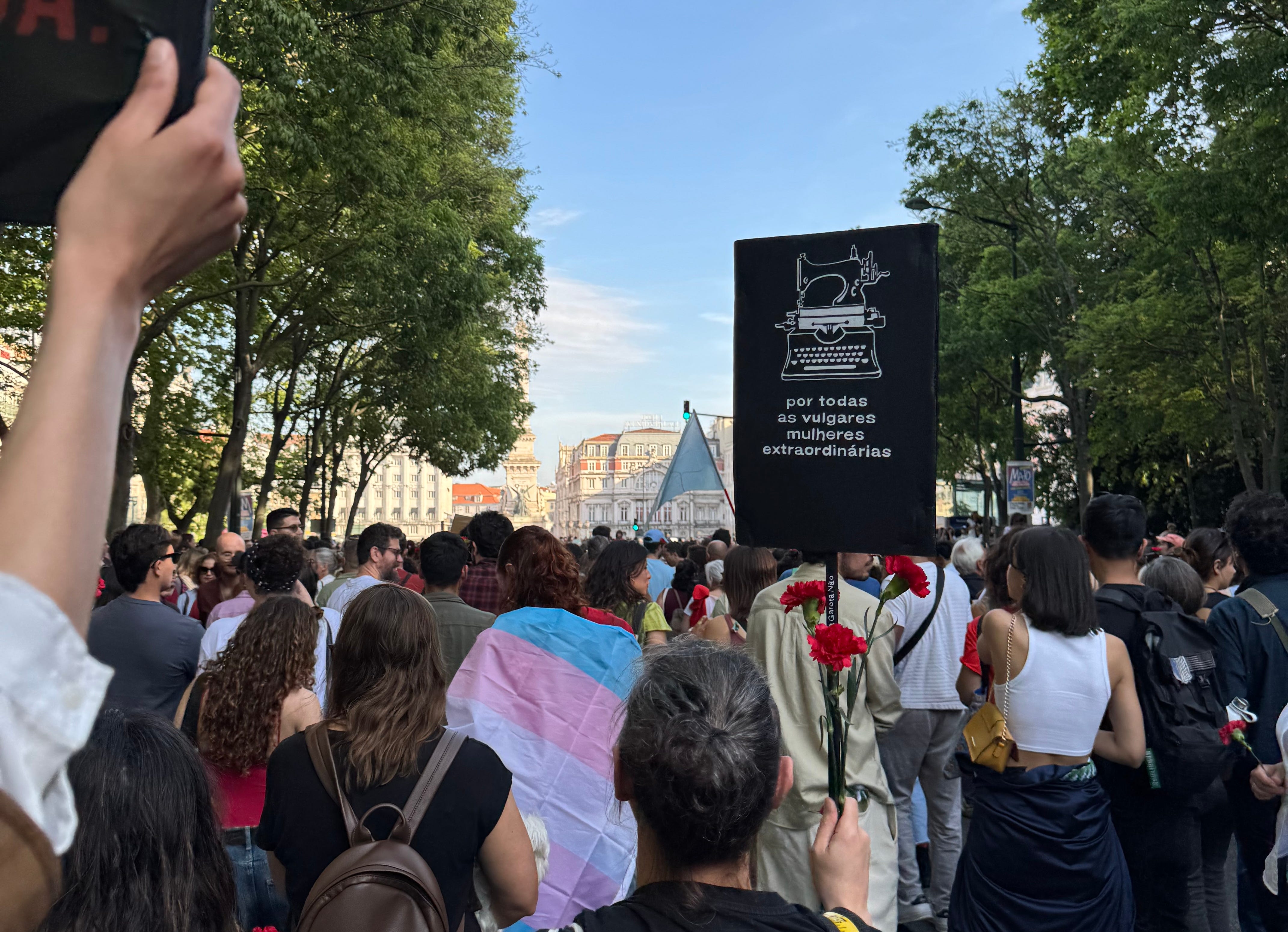
Yesterday was Portugal’s most important national holiday: April 25 celebrates the anniversary of 1974’s Carnation Revolution, the bloodless overthrow of a 48-year dictatorship. I wrote that I was going to Lisbon to watch the parade.
“For my first April 25 here I’ll just be watching and absorbing, not reporting,” I wrote. “I have no plans to write about it for an extra Queer Elder Expat tomorrow or for next Saturday. Maybe next year.”
As I also wrote at the end of my first Queer Elder Expat last summer: “Everything is subject to revision.”
Because this event was one of the most moving public experiences I’ve ever witnessed, and because I got some decent enough photos, here are some scenes from the day.
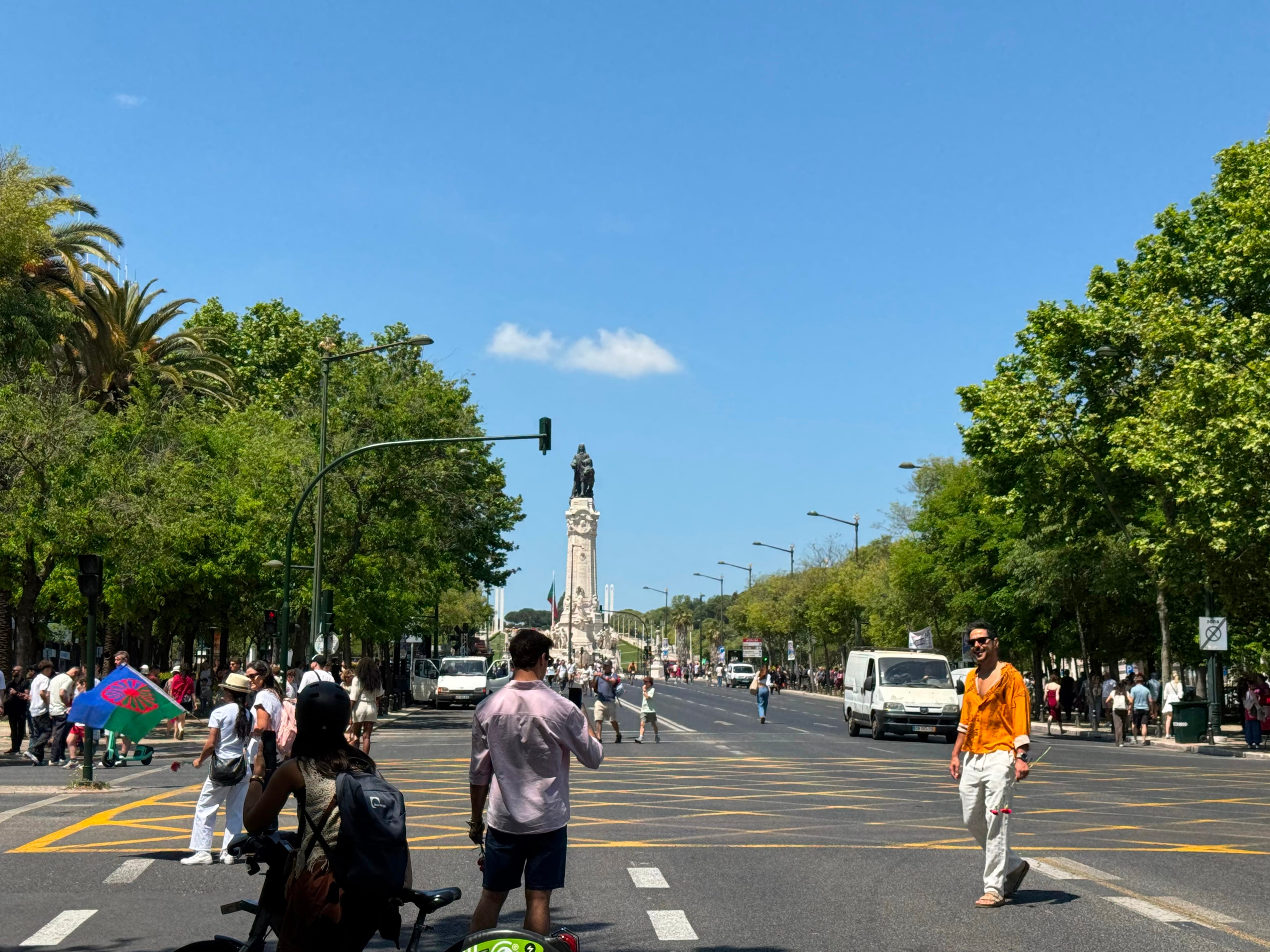
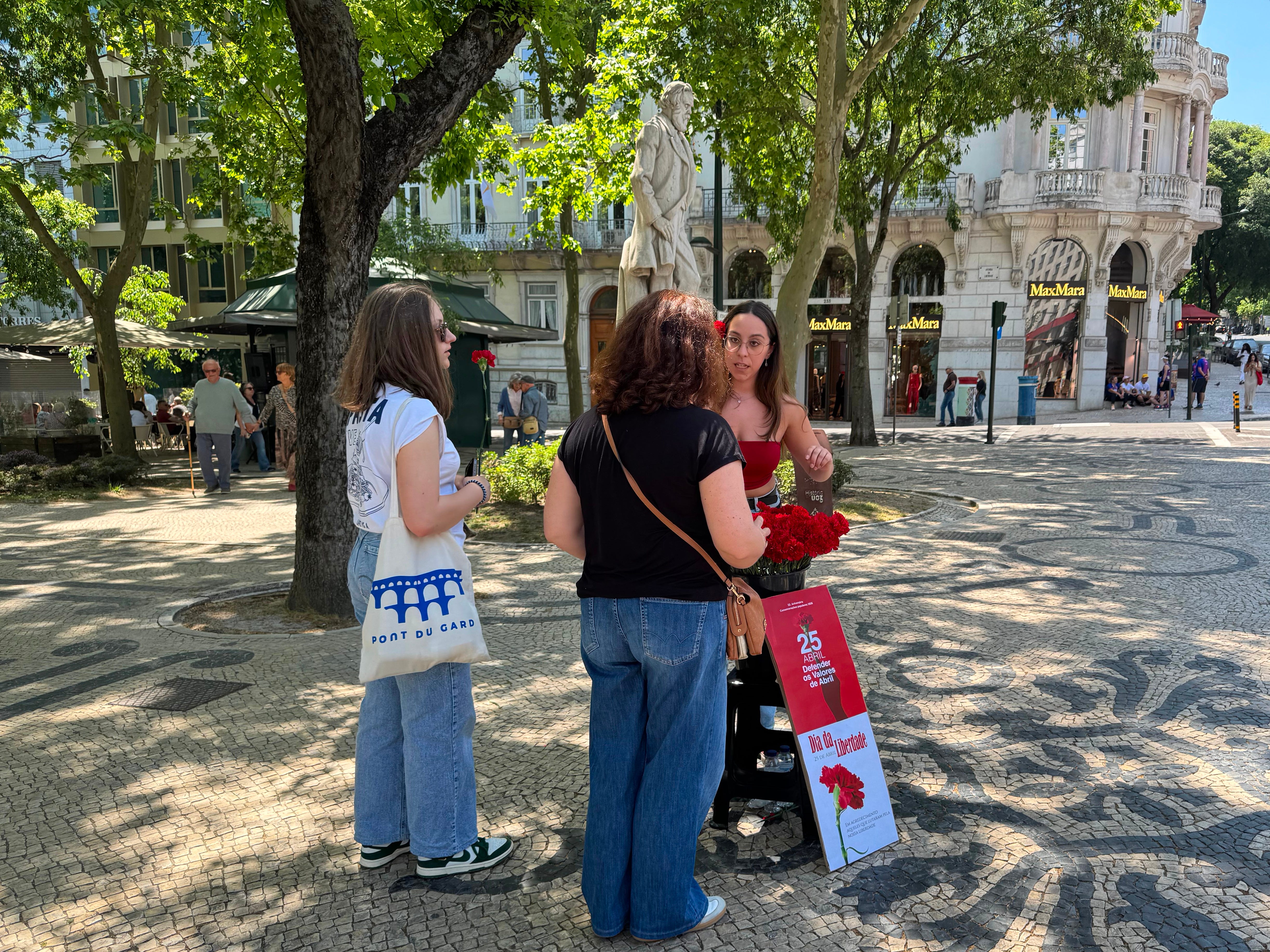
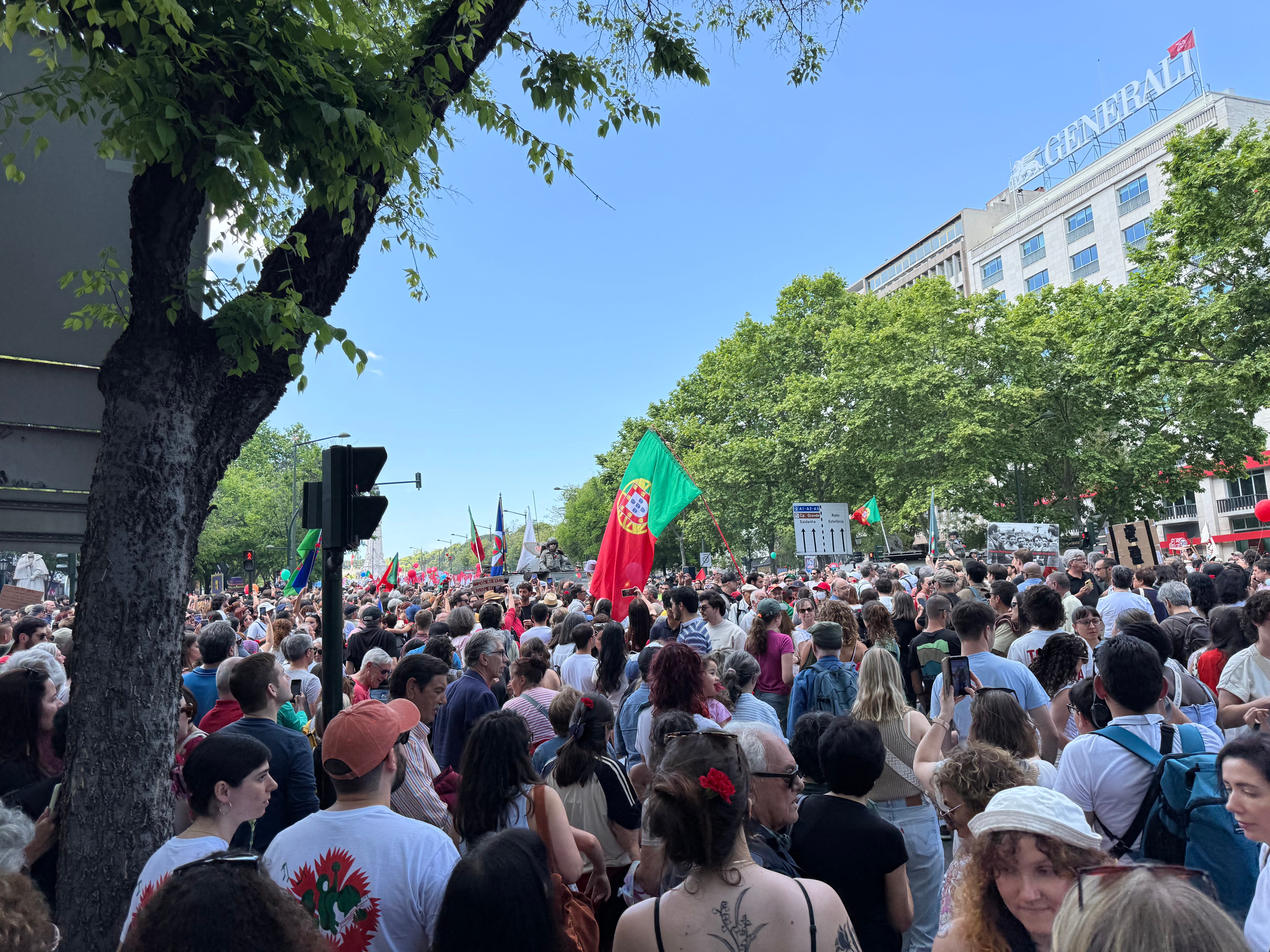
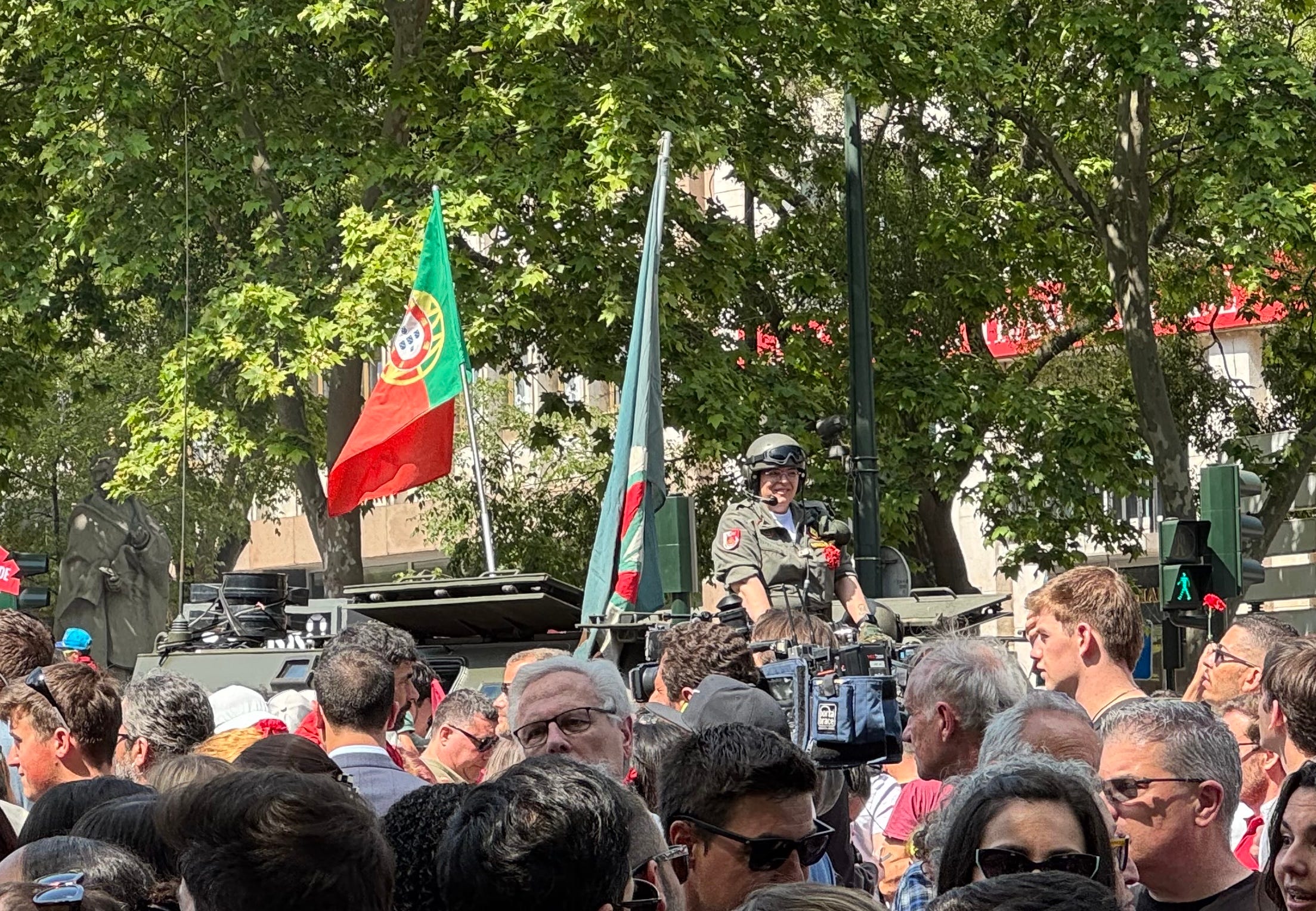
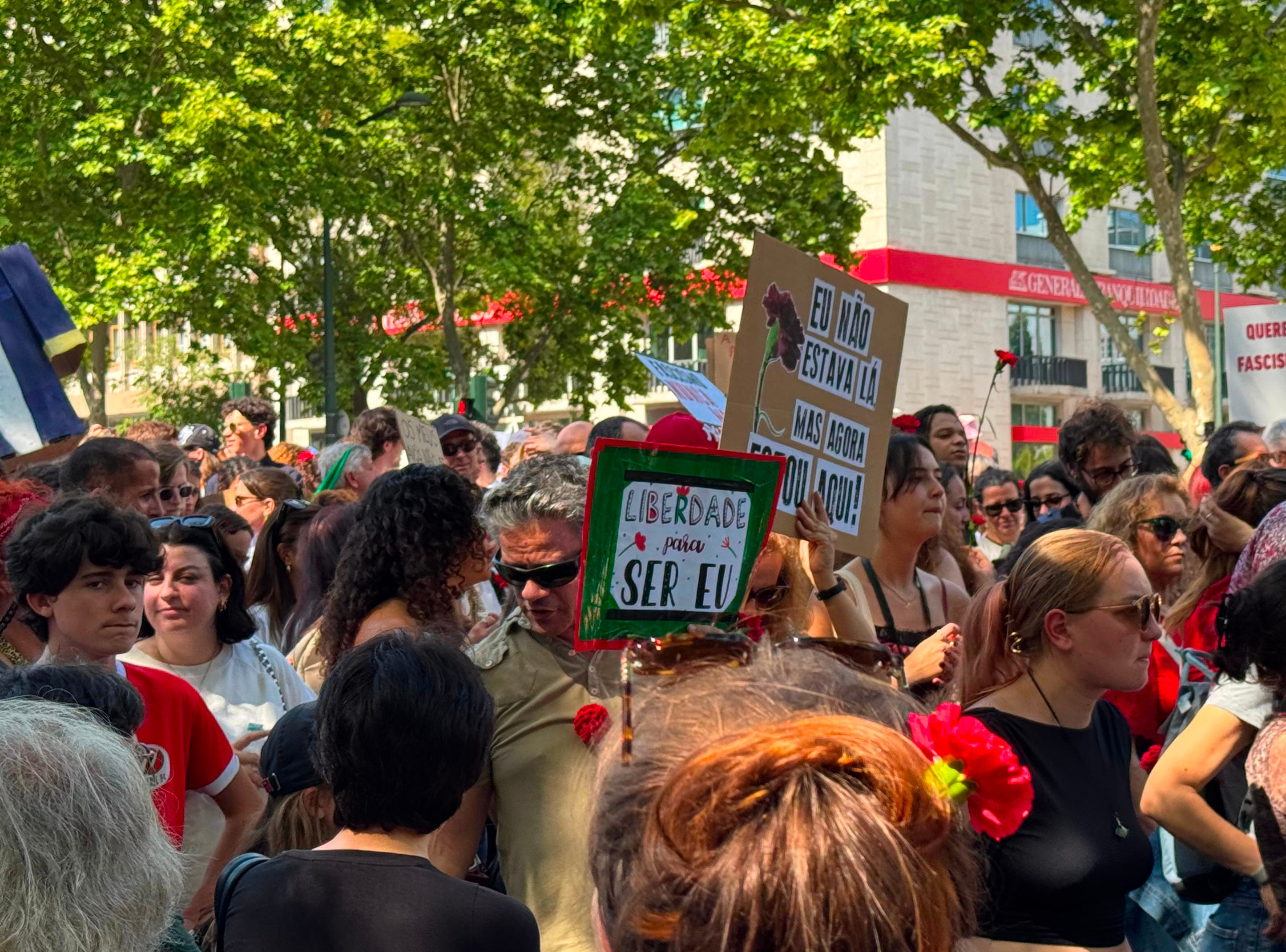
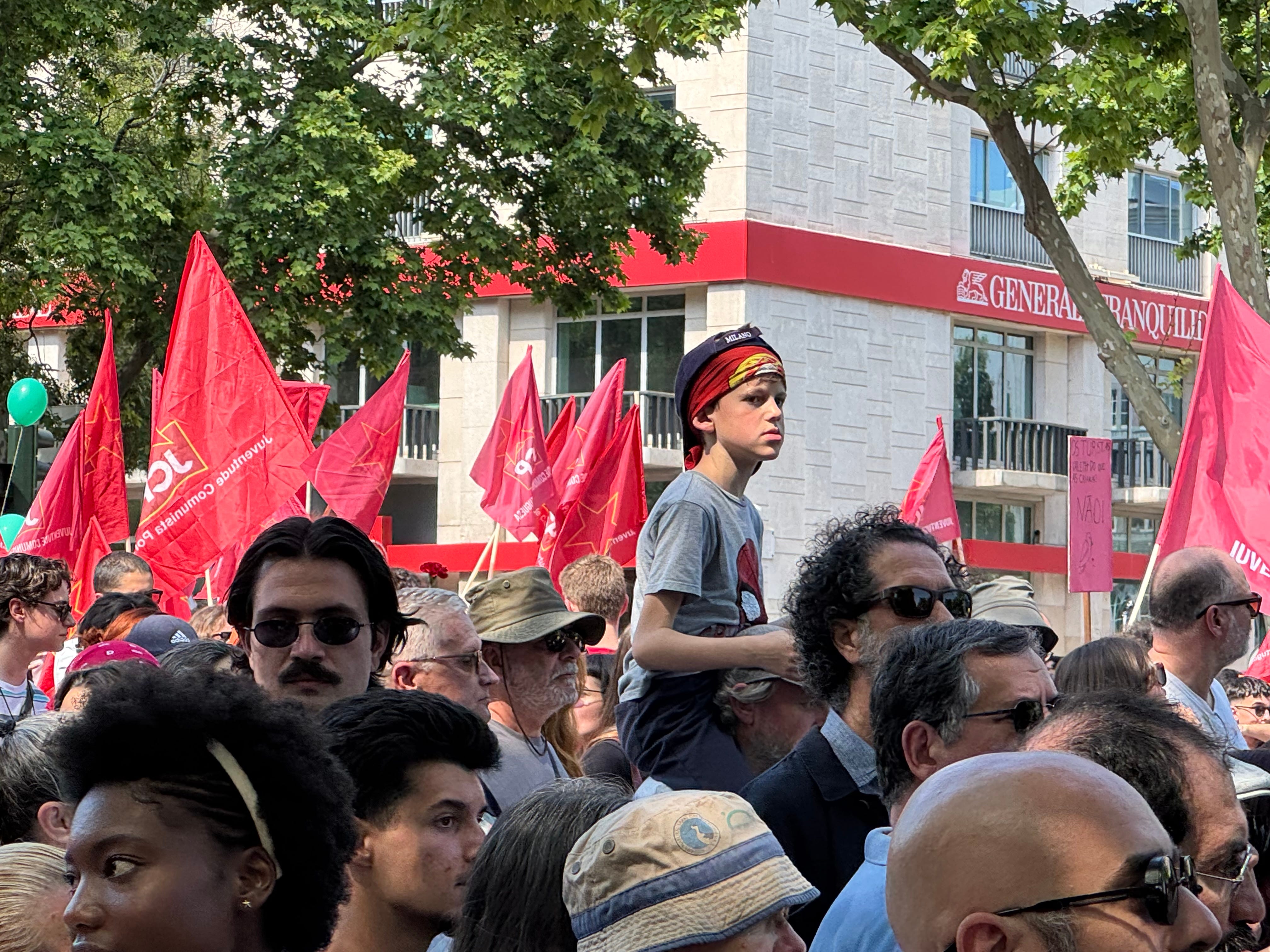
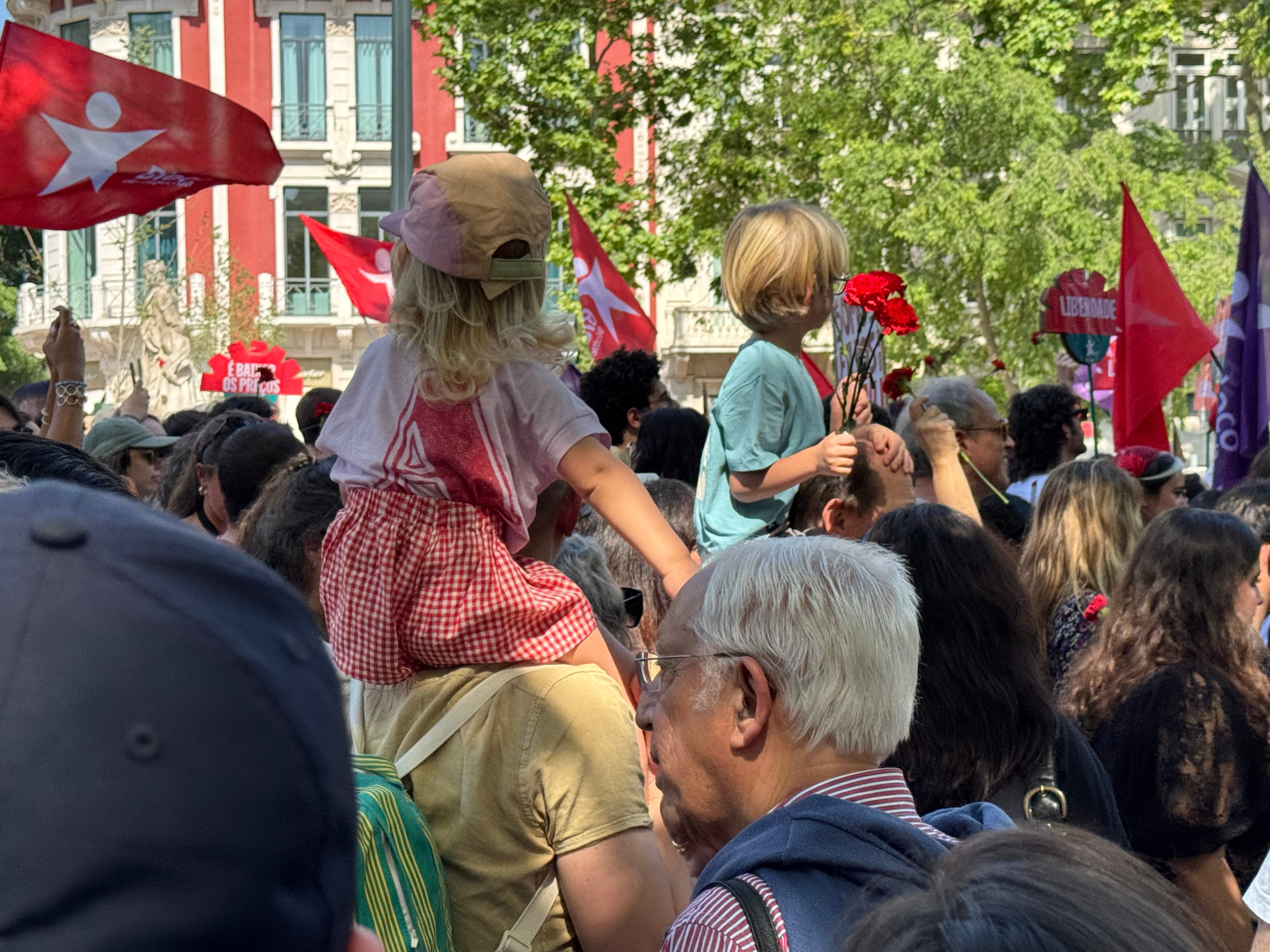
Official contingents of groups marched behind banners (political parties and advocacy organizations, from what I could determine), but in reality the parade was just an enormous crowd of people taking a leisurely walk along Avenida da Liberdade, celebrating their freedom while crowds on the sidewalks cheered and sang with them.
The three main chants were:
“Fascismo nunca mais!” (“Never again fascism!”)
“Vente-cinco abril sempre!” (“25th of April always!”)
And something that started with a verb I couldn’t understand but ended with “continuar abril” — I understood it to be about continuing to work toward the ideals of April 25. Apologies to everyone if I’m wrong.
Here’s a good fascismo nunca mais:
Often the crowd sang songs by the revered folk singer José “Zeca” Afonso. Mostly they sang “Grândola, Vila Morena,” which was broadcast over the radio to help signal the beginning of the revolution. But at one point they also sang “O Que Faz Falta.” The title translates to “What is missing?” and I’d invite anyone who’s interested to google the lyrics in Portuguese and then run them through a translation app (welcome to my world!) — the reward is rich. But basically: what’s missing is what the gang has taken from the people, and a crowd determined to take it back.
At one point, a man behind me with a strong clear voice began singing a beautiful “Grândola, Vila Morena.” He and his whole family sang it with a bit more gusto before I turned around and asked for permission to film, but they indulged me.
Many drum lines kept the crowd moving. These gals were my favorites.
After a couple of hours at my spot, it seemed as if the official march might be wrapping up before too long. I decided to join the walkers and head toward the end of the parade, though I wasn’t sure where that would be.
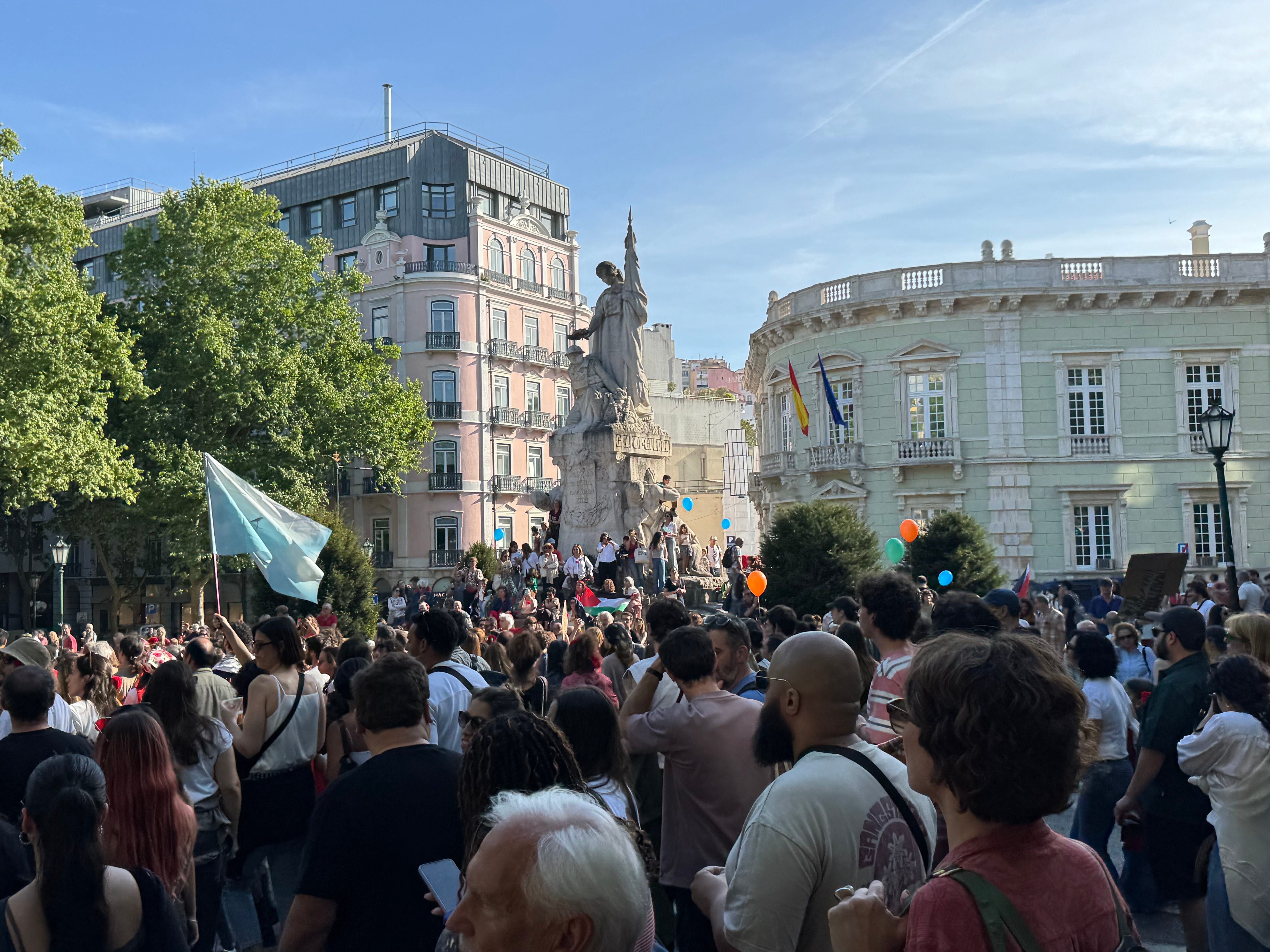
When I spotted the folks with the rainbow flags, I fell in with them. I knew better than to try to talk to anyone because it wasn’t the sort of situation where you could ask someone to repeat what they’d just said, only more slowly. But I’ve marched in enough Pride parades in my 63 years to know when it’s OK to join in. Here’s another “Grândola, Vila Morena,” this time from the queer contingent.
The march ended a few blocks later at Praça dos Restauradores. The word “restauradores” means “restorers,” not restaurants. The monument there honors the Portuguese Restoration War of the 1600s, but that’s a whole different revolution.
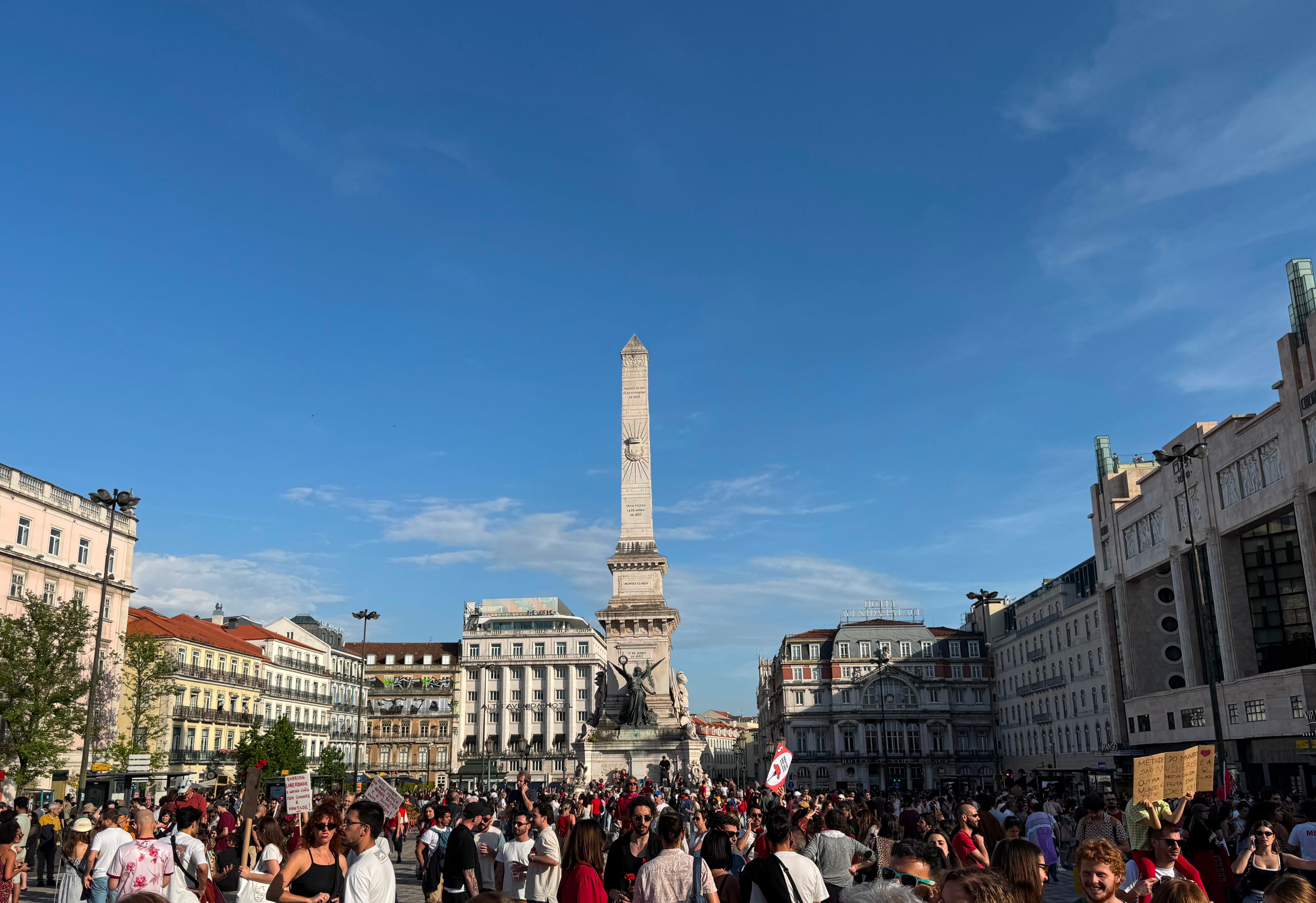
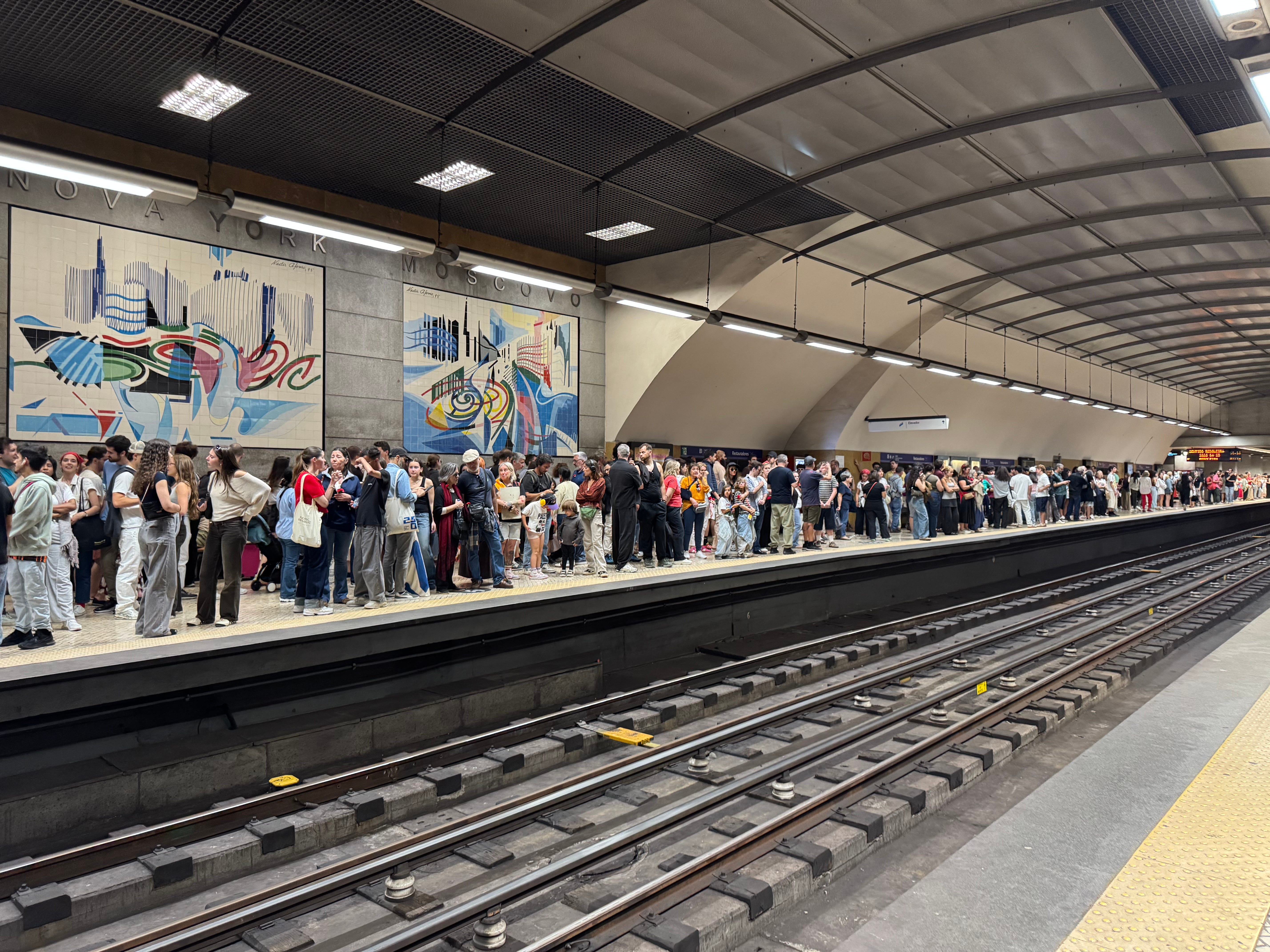
I took the Blue Line to the Santa Apolónia stop, boarded a ferry across the Tagus River and from there caught a train back home to Setúbal, thoroughly overwhelmed by the beauty of the Portuguese people.
What a terrific post about an inspiring day! I loved the videos and the enthusiasm and joy with which you described the day!
I’m not sure if I’ve ever seen Avenida so full (I did miss the celebration of 50 years of the revolution though)! It was impressive